

Louer un transpalette électrique peut sembler le choix le plus sûr. Le coût initial est moins élevé, l'engagement est plus court et l'équipement peut n'être nécessaire que pendant une période de forte activité. Pour certaines entreprises, cela a du sens.
Mais la location n'est pas toujours l'option la moins chère. Si votre équipe déplace des palettes chaque semaine ou chaque jour, l'achat d'un transpalette électrique peut vous offrir une meilleure disponibilité, plus de contrôle et un coût à long terme plus clair.
Ce guide compare la location et l'achat pour les entrepôts, les arrière-boutiques de détail, les réserves, les équipes de distribution et les petites entreprises. Il aborde la fréquence d'utilisation, le coût mensuel, la responsabilité de l'entretien, la disponibilité de l'équipement et le moment où posséder un transpalette électrique devient le choix le plus pratique. Si vous comparez les options dès maintenant, commencez par la collection de transpalettes électriques Raelon pour examiner la capacité, la configuration de la batterie, les prix, la garantie et le support.
Dans ce guide :
- Location ou achat d'un transpalette électrique : la principale différence
- Quand la location d'un transpalette électrique a du sens
- Quand l'achat a plus de sens
- La fréquence d'utilisation doit guider la décision
- Coût mensuel vs coût à long terme
- Responsabilité de l'entretien
- La disponibilité peut être plus importante que le prix
- Modèles de transpalettes électriques Raelon recommandés
- Recommandation finale
Location ou achat d'un transpalette électrique : la principale différence
La principale différence est le contrôle.
Lorsque vous louez un transpalette électrique, vous payez pour un accès temporaire. La société de location est propriétaire de l'appareil, et les termes de la location déterminent combien de temps vous pouvez l'utiliser, ce qu'il coûte et ce qui se passe si l'appareil a besoin d'être réparé.
Lorsque vous achetez un transpalette électrique, l'équipement appartient à votre entreprise. Vous contrôlez son utilisation, son emplacement, son entretien et sa disponibilité.
La location peut être utile lorsque le besoin est temporaire. L'achat a plus de sens lorsque le besoin est régulier.
C'est le point de décision de base.
| Option | Idéal pour | Principal avantage | Principal compromis |
|---|---|---|---|
| Location | Projets à court terme, pics saisonniers, besoins de réception ponctuels | Coût initial plus faible et engagement court | Moins de contrôle sur la disponibilité, l'adéquation du modèle et l'historique de l'équipement |
| Achat | Déplacement quotidien ou hebdomadaire de palettes, opérations d'entrepôt essentielles, entreprises en croissance | Toujours disponible, machine constante, coût à long terme plus clair | Coût d'achat initial plus élevé |
Conseil rapide pour l'achat
Si vous avez besoin d'un transpalette électrique pour un projet court, la location peut fonctionner. Si le déplacement de palettes fait partie de votre opération hebdomadaire ou quotidienne normale, l'achat mérite généralement un examen plus approfondi.
Quand la location d'un transpalette électrique a du sens
La location d'un transpalette électrique peut être une bonne option lorsque le besoin est à court terme ou incertain.
Cela peut inclure :
- Les pics d'inventaire saisonniers
- Les projets d'entrepôt temporaires
- Le stockage temporaire de débordement
- Une expédition ou un projet de réception ponctuel
- Tester la manutention motorisée avant d'acheter
- Remplacer une unité cassée pendant une courte période
- Ouvrir un emplacement de vente au détail ou d'entrepôt temporaire
Si votre équipe n'a besoin d'un modèle de transpalette électrique que pour quelques jours, quelques semaines ou une saison de forte activité, la location peut aider à éviter un achat initial plus important. Elle peut également être utile lorsque les flux de trésorerie sont serrés et que l'entreprise ne souhaite pas acheter d'équipement immédiatement.
La location peut également être utile lorsqu'une entreprise souhaite tester si un transpalette électrique motorisé correspond au flux de travail avant de s'engager dans un achat.
Dans ces situations, la location offre de la flexibilité.
Quand l'achat a plus de sens
L'achat a généralement plus de sens lorsque le déplacement de palettes fait partie des opérations régulières.
Si votre équipe déplace des palettes tous les jours, une location peut devenir coûteuse à la longue. Même si le coût de location mensuel semble gérable, des périodes de location répétées peuvent s'accumuler rapidement.
L'achat offre également à l'entreprise une machine toujours disponible. Cela est important lorsque l'équipement prend en charge la réception, le réapprovisionnement, la préparation ou l'expédition.
Un entrepôt ne devrait pas avoir à attendre une unité de location chaque fois que le fret entrant augmente. Une arrière-boutique ne devrait pas avoir à planifier en fonction de la disponibilité de la location pendant les périodes de livraison de pointe.
L'achat est souvent le meilleur choix lorsque :
- Le déplacement de palettes a lieu quotidiennement ou hebdomadairement
- Les mêmes itinéraires sont souvent utilisés
- L'équipement soutient les opérations principales
- L'entreprise souhaite un accès prévisible
- L'équipe a besoin d'une machine constante
- Les coûts de location à long terme sont proches du coût d'achat
- L'entreprise souhaite une garantie et un support de pièces liés à sa propre unité
Pour de nombreuses petites et moyennes entreprises, la question n'est pas de savoir si elles ont besoin d'un transpalette électrique. La question est de savoir si le besoin est temporaire ou continu. Si vous hésitez encore à savoir si le mouvement motorisé est nécessaire, lisez Transpalette électrique vs transpalette manuel : quand est-il temps de passer à la vitesse supérieure ?.
La fréquence d'utilisation doit guider la décision
Commencez par la fréquence d'utilisation.
Si votre entreprise ne déplace des palettes que quelques fois par an, la location peut suffire. Si votre équipe déplace des palettes tous les mois, la décision devient plus serrée. Si les palettes sont déplacées chaque semaine ou chaque jour, l'achat devient plus facile à justifier.
Pensez aux semaines normales, pas seulement aux périodes de pointe. Pensez également à la croissance. Une entreprise qui déplace quelques palettes aujourd'hui pourrait en déplacer davantage après avoir ajouté des produits, des fournisseurs ou de l'espace d'entrepôt.
Posez-vous ces questions :
- Combien de palettes sont déplacées par jour ou par semaine ?
- Quelle distance les opérateurs parcourent-ils avec chaque palette ?
- Le travail est-il saisonnier ou constant ?
- Les employés utilisent-ils trop souvent des transpalettes manuels ?
- Les retards à la réception ou à l'expédition affecteraient-ils l'entreprise ?
- L'équipement sera-t-il nécessaire le mois prochain ?
Si la réponse pointe vers une utilisation régulière, l'achat d'un transpalette motorisé peut être la meilleure décision à long terme.
Coût mensuel vs coût à long terme
La location peut sembler moins chère car elle évite le prix d'achat initial. C'est l'un de ses principaux avantages.
Mais le chiffre mensuel ne dit pas tout.
Un coût de location peut inclure les frais de location de base, la livraison, la récupération, les frais de dommages, les exigences d'assurance, les frais de retard ou les limites d'utilisation. Ces détails dépendent du fournisseur de location et de l'accord.
L'achat a un coût initial plus élevé, mais la machine peut être utilisée quand elle est nécessaire. Au fil du temps, le coût par utilisation peut devenir plus faible si le transpalette électrique est utilisé souvent.
Un moyen simple de comparer est d'estimer combien de mois de location équivaudraient au prix d'achat d'une nouvelle unité. Demandez ensuite si votre entreprise est susceptible d'utiliser l'équipement au-delà de ce point.
Si la réponse est oui, l'achat peut être plus pratique. Pour plus de contexte sur l'achat, voir Transpalette électrique pour petites entreprises : un guide d'achat pratique.
Responsabilité de l'entretien
La responsabilité de l'entretien est une autre différence clé.
Avec la location, le fournisseur peut gérer certains problèmes d'entretien ou de service, selon les termes du contrat de location. Cela peut être utile si l'entreprise ne souhaite pas gérer les réparations.
Mais la location signifie également que l'acheteur a moins de contrôle sur l'historique de l'équipement. L'unité peut avoir été utilisée par plusieurs clients avant d'arriver. Elle peut ne pas être la même que la dernière unité que vous avez louée.
Avec la propriété, votre entreprise est responsable de l'utilisation et de l'entretien appropriés. Cela inclut les routines de charge, l'inspection des roues, l'entretien de la batterie, les contrôles hydrauliques et les pièces de rechange.
L'avantage est la constance. Votre équipe utilise le même transpalette électrique tous les jours. Les opérateurs apprennent ses commandes, son comportement en virage, la routine de la batterie et sa manipulation.
Pour une utilisation quotidienne, cette constance peut être précieuse. Elle facilite également l'organisation des pièces de rechange et des routines d'entretien. Pour les bases de l'entretien, lisez notre guide d'entretien des transpalettes électriques.
La disponibilité peut être plus importante que le prix
La disponibilité est l'une des raisons les plus pratiques d'acheter.
Une unité de location peut ne pas toujours être disponible lorsque vous en avez besoin. Pendant les saisons de pointe, la demande d'équipement peut augmenter. Le modèle exact, la capacité, la taille des fourches ou la configuration de la batterie que vous souhaitez peuvent ne pas être prêts.
Cela peut être un problème si votre entrepôt dépend du mouvement des palettes.
Posséder un transpalette électrique signifie que la machine est sur place lorsque les livraisons arrivent. Elle est prête pour le travail quotidien de réception, de préparation, de réapprovisionnement et d'expédition.
Pour les gestionnaires d'opérations, cela peut être plus important que d'économiser de l'argent sur une location à court terme. Si un transpalette manquant ralentit l'équipe, le coût n'est pas seulement le prix de la location. C'est du temps perdu et une perturbation du flux de travail.
Location pour les pics saisonniers
La location peut être utile pour les pics saisonniers.
Si votre entreprise n'a besoin d'équipement de manutention supplémentaire que pendant une saison des fêtes, une période promotionnelle, une réinitialisation des stocks ou une expansion temporaire d'entrepôt, la location peut être la bonne option.
Par exemple, un commerce de détail peut déjà posséder un transpalette électrique, mais en louer un autre pendant les semaines de réception de pointe. Un entrepôt peut louer de l'équipement supplémentaire lors de la gestion d'un contrat à court terme.
Dans ce cas, la location fonctionne comme un complément, et non un remplacement de l'équipement de base.
C'est souvent la meilleure utilisation de la location. Possédez l'équipement dont vous avez besoin tous les jours. Louez des unités supplémentaires lorsque la demande à court terme dépasse la capacité normale.
Achat pour le travail quotidien en entrepôt
L'achat est généralement préférable lorsque le transpalette électrique fait partie du flux de travail quotidien.
Cela inclut :
- Réception des palettes
- Déplacement des stocks vers les zones de stockage
- Transport des marchandises vers les zones de préparation
- Préparation des expéditions sortantes
- Soutien au réapprovisionnement des magasins
- Déplacement des palettes entre les zones de l'entrepôt
- Réduction de la manutention manuelle pour les employés
Si votre équipe utilise des transpalettes manuels tous les jours, un transpalette électrique peut réduire la fatigue et rendre les mouvements plus constants. Si ce besoin est continu, l'achat évite la planification répétée de la location.
Une nouvelle machine donne également à l'entreprise un historique d'équipement plus clair. Vous connaissez l'état de la batterie, l'état des roues, l'historique d'entretien et la routine de charge dès le départ.
Cela peut être particulièrement utile pour les petites équipes qui n'ont pas le temps de gérer les calendriers de location et les changements d'équipement.
Pour un modèle pratique d'utilisation quotidienne, comparez le transpalette électrique lithium-ion Raelon F4 3300lbs. Si votre opération gère des palettes plus lourdes ou un travail de quai plus intense, comparez le transpalette électrique lithium-ion Raelon F4-201 4400lbs.
Configuration de la batterie et chargement
La configuration de la batterie est importante que vous louiez ou achetiez.
Pour la location, demandez si la batterie est entièrement chargée, combien de temps elle est censée fonctionner, quel chargeur est inclus et ce qui se passe si la batterie ne maintient pas correctement la charge.
Pour l'achat, examinez comment la batterie s'intègre à votre routine quotidienne. Les transpalettes électriques au lithium-ion sont souvent plus faciles pour les petites et moyennes opérations car ils prennent en charge des habitudes de charge simples et un entretien réduit.
Avant de choisir l'une ou l'autre option, vérifiez :
- Type de batterie
- Chargeur inclus
- Emplacement de charge
- Utilisation quotidienne prévue
- Disponibilité des batteries de remplacement
- Conditions de stockage à froid ou à chaud
- Routine de charge de l'opérateur
Une unité de location avec une batterie faible peut ralentir le travail. Une unité achetée avec une mauvaise routine de charge peut également créer des problèmes. La planification de la batterie est importante dans les deux cas.
Pour plus de conseils sur les batteries, lisez Transpalette électrique lithium-ion vs AGM : quelle configuration de batterie choisir ?.
Taille des fourches, capacité et zone de travail
Ne choisissez pas la location ou l'achat avant de vérifier les spécifications réelles de l'équipement.
Le transpalette électrique doit correspondre à votre poids de charge, à la taille de la palette, aux dimensions des fourches, à l'état du sol et à l'espace de virage.
Un fournisseur de location peut n'avoir que certains modèles disponibles. Cela peut fonctionner pour une tâche à court terme, mais ce n'est peut-être pas idéal pour une utilisation quotidienne. Si la taille des fourches, la capacité ou la manipulation ne correspondent pas à votre opération, la location peut être incommode.
Lors de l'achat, vous pouvez choisir un modèle qui correspond plus étroitement à votre zone de travail.
Par exemple, une arrière-boutique de détail peut avoir besoin d'un transpalette électrique compact pour les espaces restreints. Un quai d'entrepôt peut avoir besoin d'une capacité plus élevée pour les marchandises plus lourdes. Une équipe de distribution peut accorder plus d'importance à la configuration de la batterie et au volume de mouvement quotidien.
Faire correspondre la machine au travail est plus facile lors de l'achat pour un flux de travail connu. Pour la taille des fourches, voir Comment choisir la taille des fourches pour un transpalette électrique. Pour la capacité, lisez Transpalette électrique 3300 lb vs 4400 lb : quelle capacité convient à votre opération ?.
Modèles de transpalettes électriques Raelon recommandés
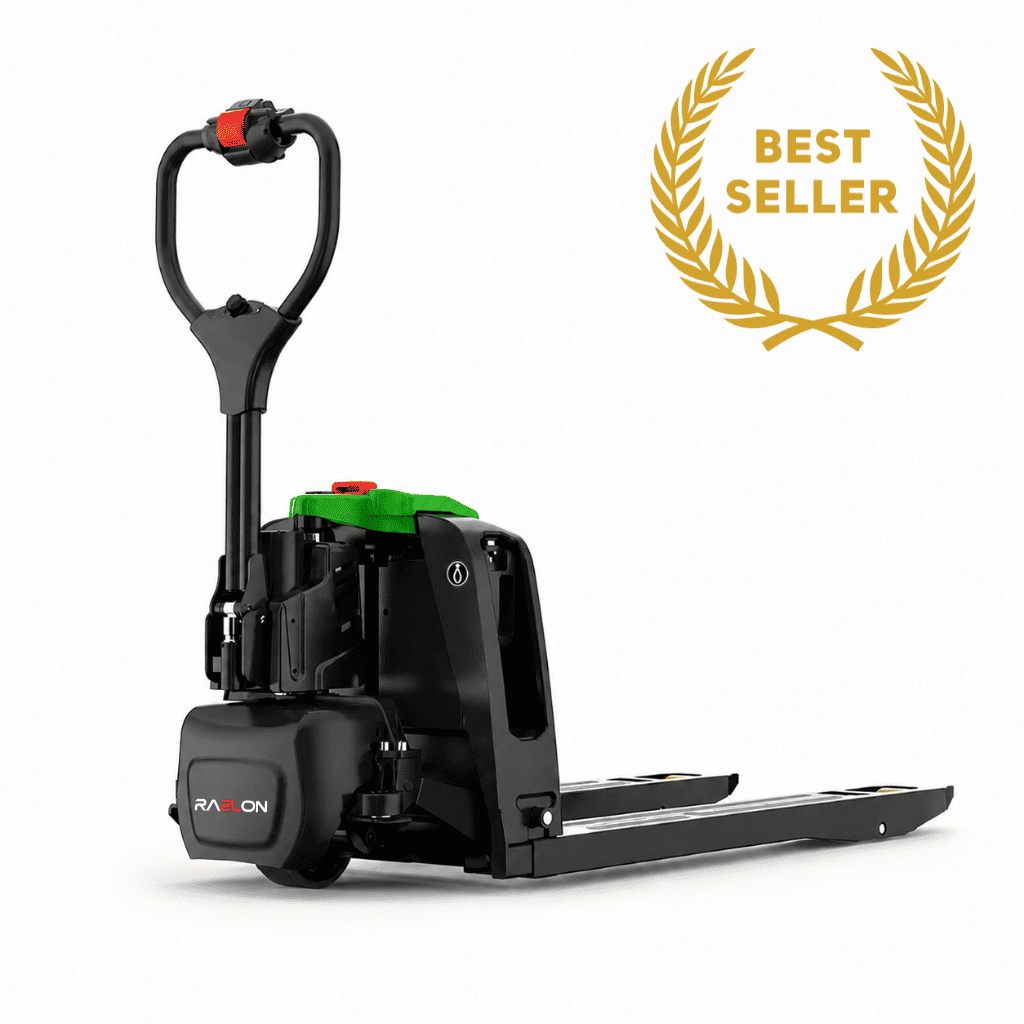
Transpalette électrique lithium-ion Raelon F4 3300lbs
1 859 CAD / 1 699 USD
2 190 CAD / 1 999 USD
Un transpalette électrique au lithium équilibré de 3300 lb pour l'entrepôt, l'arrière-boutique et les réceptions quotidiennes.
Voir le produit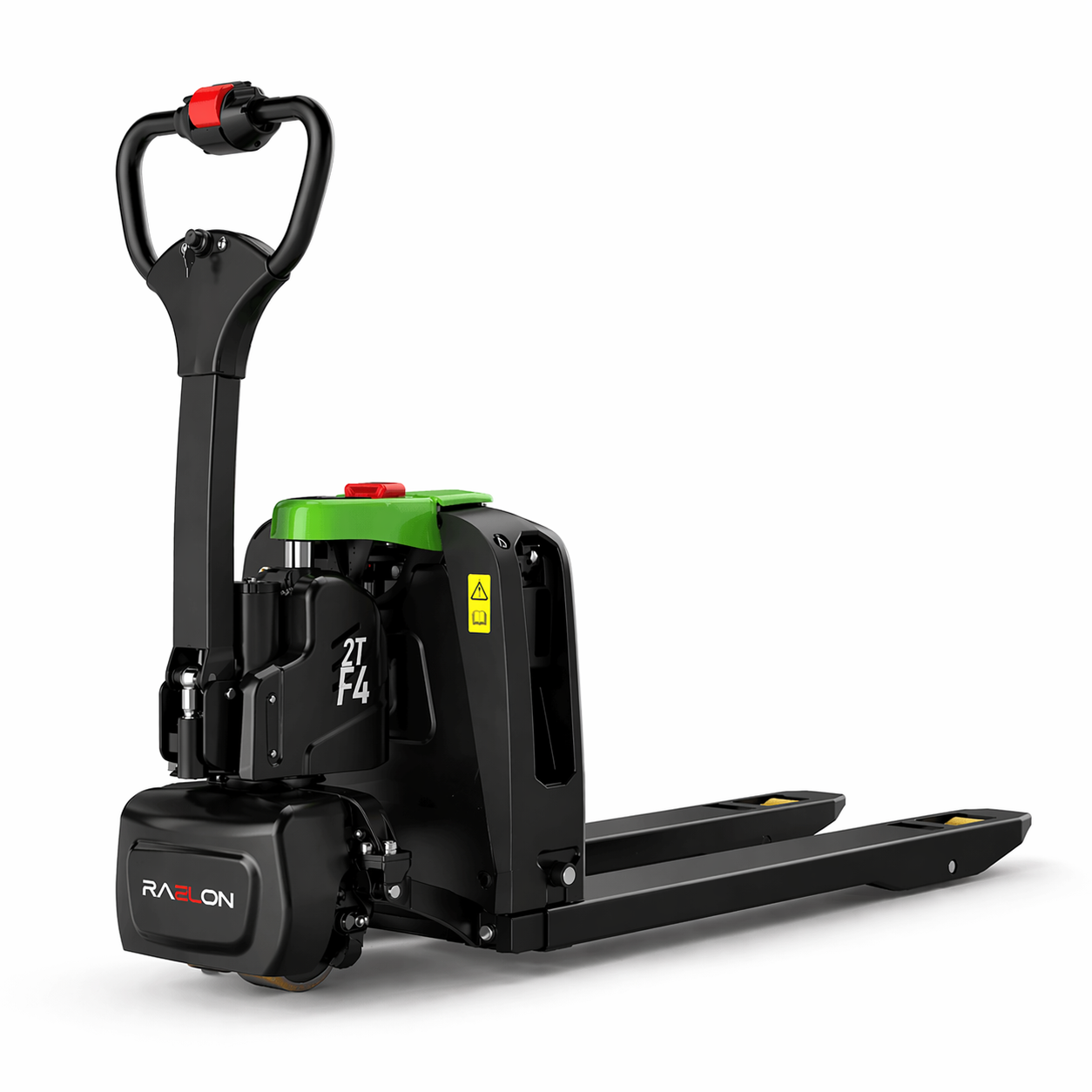
Transpalette électrique lithium-ion Raelon F4-201 4400 lb
2 895 $ CA
3 217 $ CA
Un transpalette au lithium de 4400 lb pour des charges plus lourdes, les quais de chargement et les flux de travail quotidiens plus exigeants.
Voir le produit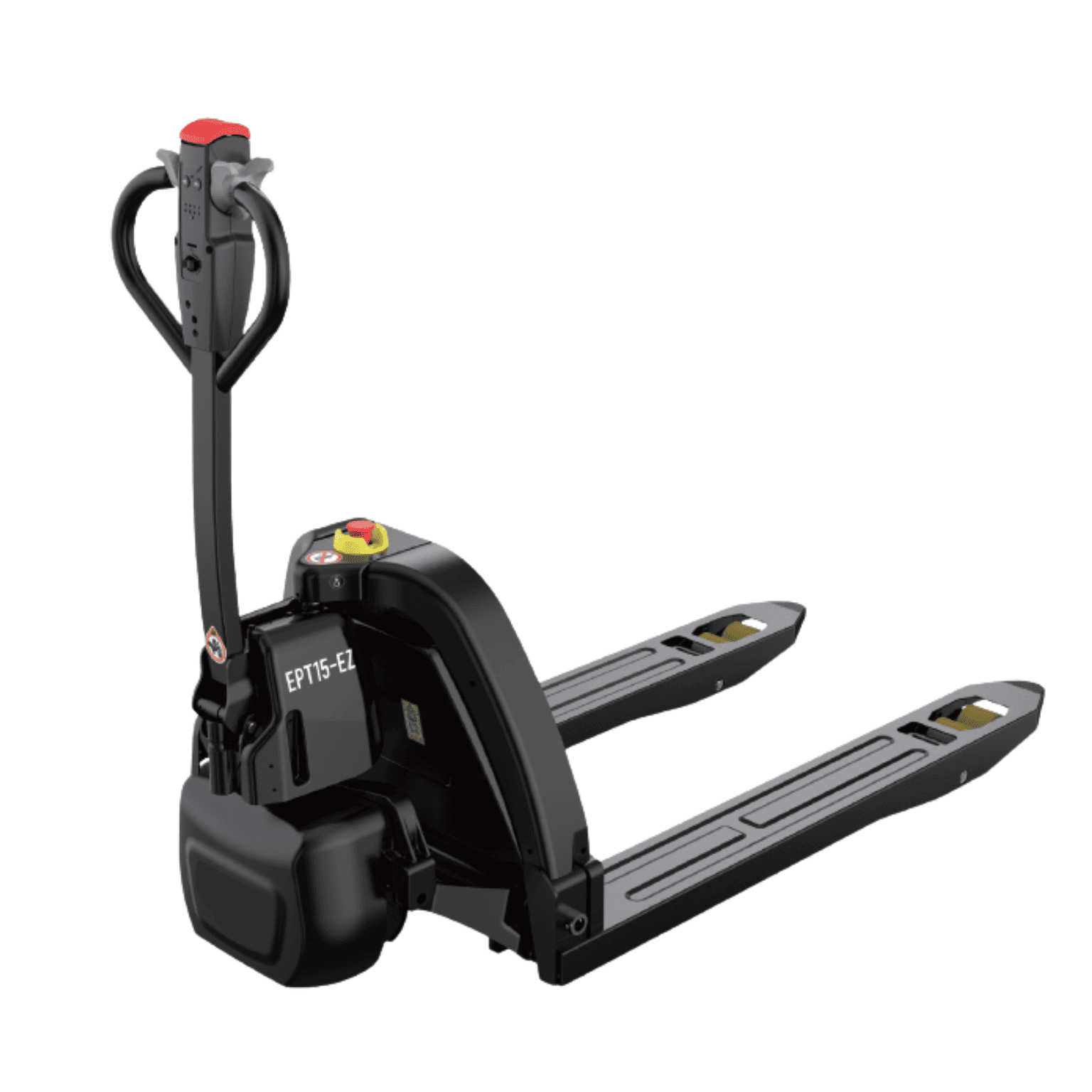
Transpalette électrique Raelon EPT15-EZ 3300 lb
1 699 $ CA
1 999 $ CA
Un transpalette électrique d'entrée de gamme pratique pour les flux de travail plus légers, les petits espaces et les courtes distances de transport.
Voir le produitQuels modèles Raelon répondent aux besoins d'achat?
Raelon ne se positionne pas comme un fournisseur de location de transpalettes électriques. Raelon se concentre sur les nouveaux transpalettes électriques pour les entreprises qui souhaitent un équipement fiable pour une utilisation régulière.
Le Raelon F4 est un transpalette électrique lithium-ion de 3300 lb pour les entrepôts, les arrière-boutiques de détail, les réserves et le déplacement quotidien général de palettes. C'est une option pratique pour les entreprises qui passent des transpalettes manuels aux transpalettes électriques.
Le Raelon F4-201 est un transpalette électrique lithium-ion de 4400 lb pour les travaux d'entrepôt plus lourds, les quais de chargement et les équipes qui ont besoin d'une capacité plus importante.
Le Raelon EPT15-EZ est un transpalette électrique de 3300 lb pour les flux de travail plus légers, les zones de travail plus petites et une utilisation quotidienne simple.
Si votre entreprise compare la location en raison du coût initial, il peut être intéressant de comparer ces nouveaux modèles par rapport à la période de location prévue. Pour de nombreuses opérations à usage régulier, l'achat d'une nouvelle machine peut être le choix le plus clair à long terme.
Une règle de décision simple
Utilisez la location lorsque le besoin est à court terme, saisonnier, incertain ou basé sur un projet.
Utilisez l'achat lorsque le besoin est régulier, prévisible et lié aux opérations quotidiennes.
Une entreprise qui a besoin d'un transpalette électrique pendant un mois peut bénéficier de la location. Une entreprise qui a besoin de la même machine chaque semaine devrait comparer le coût d'achat.
Une entreprise avec une charge de travail normale et des pics saisonniers occasionnels peut utiliser les deux. Achetez l'unité principale. Louez du matériel supplémentaire uniquement lorsque la demande de pointe l'exige.
Cette approche permet à l'entrepôt de rester flexible sans transformer chaque besoin d'équipement en un coût de location répété.
Erreurs courantes à éviter
La première erreur est de louer trop longtemps sans vérifier le coût total. Une location peut sembler moins chère d'un mois à l'autre, mais elle peut devenir coûteuse si l'équipement est nécessaire pendant une période prolongée.
La deuxième erreur est d'acheter trop rapidement pour un besoin temporaire. Si le travail est court et ne se répétera pas, la location peut suffire.
La troisième erreur est d'ignorer la disponibilité. L'équipement de location peut ne pas être prêt exactement au moment où votre expédition arrive.
La quatrième erreur est d'ignorer les spécifications. Une unité de location doit toujours avoir la bonne capacité, la bonne taille de fourche, la bonne configuration de batterie et la bonne maniabilité.
La cinquième erreur est de ne pas penser au support. Que vous louiez ou achetiez, vous avez besoin d'un plan pour le service, les pièces de rechange, la recharge et les temps d'arrêt.
Guides connexes
- Transpalette électrique neuf ou d'occasion : ce que les acheteurs devraient vérifier avant de payer
- Transpalette électrique vs transpalette manuel : quand est-il temps de mettre à niveau?
Recommandation finale
La location d'un transpalette électrique est judicieuse pour les besoins à court terme, saisonniers ou temporaires. L'achat est plus judicieux lorsque le déplacement de palettes fait partie des opérations normales et que l'équipement doit être disponible chaque semaine ou chaque jour.
Si vous recherchez un transpalette électrique à louer parce que votre équipe a besoin de déplacer des palettes plus souvent, il peut être temps de comparer également les options d'achat.
Raelon propose de nouveaux modèles de transpalettes électriques pour différents besoins d'entrepôt, y compris les F4, F4-201 et EPT15-EZ. Parcourez la collection complète de transpalettes électriques Raelon, ou contactez Raelon pour comparer la capacité, la configuration de la batterie, la taille des fourches, l'expédition, la garantie, les pièces de rechange et le support de service partout au Canada et aux États-Unis.


