

Les réserves et les arrière-boutiques des commerces de détail ne sont pas conçues comme des entrepôts ouverts. L'espace est plus restreint, les délais de livraison sont plus courts, et le personnel doit souvent réceptionner, déplacer et organiser les stocks pendant que le magasin continue de fonctionner.
Un transpalette manuel peut encore convenir pour des livraisons occasionnelles. Cependant, dès que le mouvement de palettes devient une opération hebdomadaire ou quotidienne, un transpalette électrique peut faciliter la réception et le réapprovisionnement pour les petites équipes.
Ce guide explique ce qu'il faut vérifier avant de choisir un transpalette électrique pour les réserves et arrière-boutiques de vente au détail. Il se concentre sur les espaces restreints, les palettes standard, les trajets courts, la réception des livraisons, l'effort de l'opérateur et le moment opportun pour remplacer un transpalette manuel. Si vous comparez des options dès maintenant, commencez par la collection de transpalettes électriques Raelon.
Dans ce guide :
- Pourquoi les arrière-boutiques nécessitent une approche d'achat différente
- Remplacement d'un transpalette manuel
- Espaces restreints et contrôle de braquage
- Palettes standard et taille des fourches
- Les itinéraires de transport courts sont importants
- Réception des livraisons dans les magasins de détail
- Configuration de la batterie pour l'utilisation en arrière-boutique
- Transpalettes électriques Raelon recommandés
- Recommandation finale
Pourquoi les arrière-boutiques nécessitent une approche d'achat différente
Une arrière-boutique de détail est généralement plus encombrée qu'une allée d'entrepôt. On peut y trouver des étagères, des chariots, du matériel de présentation, du carton, des stocks saisonniers, des zones pour le personnel et des portes étroites dans le même espace.
Cela modifie la manière dont l'équipement doit être sélectionné.
Dans un entrepôt, un acheteur peut se concentrer d'abord sur la capacité, la distance de déplacement et l'autonomie de la batterie. Dans une arrière-boutique, la première question est souvent de savoir si le chariot peut se déplacer dans l'espace sans repositionnement constant.
Le transpalette électrique doit être suffisamment compact pour entrer dans la zone de réception, tourner près des étagères et déplacer les palettes sans gêner l'équipe.
Une machine plus grande peut ne pas être utile si elle ne peut pas se déplacer en douceur à l'intérieur de l'arrière-boutique. Pour une utilisation en commerce de détail, la maniabilité pratique est souvent plus importante que de choisir le modèle le plus lourd possible.
Conseil d'achat rapide
Pour les arrière-boutiques, ne commencez pas par le chiffre de capacité le plus élevé. Commencez par votre virage le plus serré, votre chemin de réception, la taille de votre palette et les personnes qui utiliseront la machine chaque semaine.
Remplacement d'un transpalette manuel : Quand cela a du sens
De nombreux magasins de détail commencent avec des transpalettes manuels car ils sont simples et peu coûteux. Pour les livraisons légères, cela peut suffire.
Mais l'équipement manuel devient plus difficile à justifier lorsque le déplacement des palettes devient fréquent ou lorsque les charges sont plus lourdes que prévu. Les employés peuvent avoir besoin de pousser, tirer et diriger des palettes chargées dans des zones restreintes. Cet effort s'accumule rapidement, surtout lorsque la même petite équipe gère la réception, l'approvisionnement, le service client et les opérations du magasin.
Un transpalette électrique peut réduire le travail physique nécessaire pour déplacer les palettes. L'opérateur marche toujours avec le chariot, mais le déplacement motorisé rend le transport court plus facile et plus contrôlé.
Il peut être temps de remplacer un transpalette manuel si :
- Les livraisons arrivent plusieurs fois par semaine
- Le personnel déplace des palettes chargées dans des zones étroites de l'arrière-boutique
- Les employés ont souvent besoin d'aide pour déplacer des palettes plus lourdes
- La réception ralentit les autres travaux du magasin
- Le transpalette manuel est difficile à manœuvrer dans des espaces restreints
- La même équipe gère le déchargement et le réapprovisionnement
- Le déplacement des palettes fait partie des opérations normales
Pour les petites équipes de vente au détail, la réduction de l'effort peut être tout aussi importante que la vitesse. Si vous décidez s'il est temps de mettre à niveau, lisez Transpalette électrique vs transpalette manuel : Quand est-il temps de passer à la vitesse supérieure ?.
Espaces restreints et contrôle de braquage
Les espaces restreints sont le principal défi dans les arrière-boutiques de détail.
Un transpalette électrique doit être facile à positionner près d'une palette, à déplacer dans des passages étroits et à tourner sans heurter les étagères ou les stocks entreposés. C'est pourquoi les acheteurs devraient regarder au-delà de la capacité et vérifier le profil de maniabilité réel de la machine.
Avant de commander, mesurez les zones où le transpalette électrique fonctionnera le plus souvent.
Vérifiez :
- La largeur de la porte de réception
- La largeur des allées de l'arrière-boutique
- La distance entre les étagères
- L'espace près du quai ou de l'entrée de livraison
- La zone de virage avec une palette pleine
- Les zones de stockage où les palettes sont garées
- Les itinéraires de la réception au stock
- Les zones où le personnel ou les chariots peuvent bloquer le mouvement
Le virage le plus serré est généralement plus important que la plus grande zone ouverte. Si le transpalette électrique peut gérer le point le plus serré, il gérera généralement le reste de l'arrière-boutique plus facilement.
Pour une option compacte et polyvalente, le transpalette électrique lithium-ion Raelon F4 3300 lb est souvent un modèle solide à comparer pour la réception en arrière-boutique et le déplacement en stock.
Palettes standard et taille des fourches
La plupart des livraisons de détail utilisent des palettes standard, mais les acheteurs doivent tout de même vérifier la taille des fourches avant de commander.
Une taille de fourche courante pour de nombreux transpalettes électriques est de 48" x 27". Cela convient à de nombreuses palettes nord-américaines standard et fonctionne bien pour la réception générale, le stockage et les déplacements sur de courtes distances.
Les modèles F4 et F4-201 de Raelon utilisent des fourches de 48" x 27", ce qui les rend pratiques pour de nombreux flux de travail avec des palettes standard.
Cependant, les arrière-boutiques de détail peuvent également recevoir des petits skids, des palettes de fournisseurs mixtes, des palettes d'affichage ou des palettes partielles. Si votre magasin gère des types de palettes non standard, mesurez les ouvertures des palettes et confirmez l'ajustement des fourches.
La longueur des fourches affecte également l'espace de virage. Les fourches standard offrent un bon support de charge, mais elles ont besoin de suffisamment d'espace pour tourner. Dans les arrière-boutiques très étroites, une personnalisation des fourches courtes peut valoir la peine d'être discutée.
L'objectif n'est pas de choisir la fourche la plus petite possible. L'objectif est de choisir des fourches qui supportent la charge tout en s'adaptant à l'espace. Pour plus de détails, consultez Comment choisir la taille des fourches pour un transpalette électrique.
Les itinéraires de transport courts sont importants
Le mouvement de palettes en magasin est souvent court, mais cela ne le rend pas facile.
Un itinéraire typique peut aller de la porte de livraison à l'arrière-boutique, de la réception au stockage, ou du stockage à une zone de préparation pour le réapprovisionnement. Ces itinéraires ne sont peut-être que sur une courte distance, mais ils peuvent inclure des virages serrés, des transitions irrégulières, des personnes marchant à proximité et un espace de préparation limité.
C'est là qu'un transpalette électrique peut être utile. Il réduit les efforts de poussée et de traction nécessaires lors des déplacements courts et répétés.
Le transport court est également courant lors du réapprovisionnement des magasins. Une équipe peut déplacer une palette, en décharger une partie, la repositionner, puis la déplacer à nouveau plus tard. Même lorsque chaque déplacement est court, l'effort total de manipulation peut être élevé.
Pour une utilisation en commerce de détail, le bon transpalette électrique doit être facile à contrôler à basse vitesse. Il ne doit pas paraître surdimensionné ou difficile à arrêter dans un espace encombré.
Réception des livraisons dans les magasins de détail
La réception des livraisons est l'un des cas d'utilisation les plus importants pour les arrière-boutiques de détail.
Un camion arrive, le personnel doit décharger ou réceptionner des palettes, vérifier l'expédition, déplacer les stocks à l'intérieur et libérer la zone de réception. Si le magasin dispose d'un personnel limité, ce processus doit être simple.
Un transpalette manuel peut fonctionner pour les livraisons légères. Mais lorsque les palettes sont plus lourdes, ou lorsque l'équipe doit déplacer plusieurs palettes dans un court laps de temps, les transpalettes électriques peuvent rendre le processus plus fluide.
Pour la réception, les acheteurs doivent vérifier :
- Le poids typique des palettes
- Le nombre de palettes par livraison
- L'état du sol à l'entrée de réception
- Si le trajet inclut une rampe ou un seuil
- L'espace pour tourner après être entré dans l'arrière-boutique
- L'autonomie de la batterie pour les fenêtres de réception
- Si les employés peuvent charger la batterie en toute sécurité
Si les livraisons sont fréquentes, l'achat du bon transpalette électrique peut réduire la pression sur l'équipe et aider à maintenir la zone de réception dégagée. Pour les équipes de magasin ayant des tâches de réception répétées, le transpalette électrique Raelon EPT15-EZ 3300 lb peut être une option motorisée d'entrée de gamme pratique.
Les petites équipes ont besoin d'équipements simples
Les équipes de vente au détail sont souvent petites. Les mêmes employés peuvent gérer les clients, le réapprovisionnement, la réception, le nettoyage et l'organisation de l'arrière-boutique.
Cela signifie que l'équipement doit être simple. Les opérateurs ne devraient pas avoir besoin d'un processus compliqué pour utiliser ou charger la machine.
Un bon transpalette électrique pour le commerce de détail doit avoir des commandes claires, un mouvement prévisible, une recharge facile et une manipulation pratique de la batterie. Si la batterie est amovible, l'équipe peut la charger à l'intérieur sans déplacer tout le chariot vers une zone de charge.
Les modèles de transpalettes électriques lithium-ion de Raelon sont conçus pour une utilisation quotidienne pratique. Pour les acheteurs de détail, c'est utile car la routine de charge peut être maintenue simple.
Un équipement simple aide également lorsque plusieurs employés partagent la même machine. Les commandes doivent être faciles à comprendre, et le chariot doit être maniable dans les espaces restreints.
Configuration de la batterie pour l'utilisation en arrière-boutique
La configuration de la batterie est importante dans le commerce de détail car l'espace de chargement peut être limité.
Un grand entrepôt peut avoir une zone de chargement définie. Un magasin de détail peut ne pas en avoir. Le transpalette électrique peut devoir rester dans l'arrière-boutique, près de la réception ou dans un coin de stockage.
Les batteries lithium-ion sont souvent bien adaptées à ce type d'utilisation car elles sont plus faciles à gérer que de nombreuses anciennes configurations de batteries. Une batterie amovible peut être chargée à l'intérieur, loin de la circulation et des températures extrêmes.
Avant d'acheter, demandez :
- Où la batterie sera-t-elle chargée ?
- La batterie peut-elle être retirée ?
- À quelle fréquence le chariot sera-t-il utilisé ?
- L'équipe se souviendra-t-elle de le charger après les livraisons ?
- La zone de chargement est-elle sèche, stable et protégée ?
- La batterie sera-t-elle stockée dans des conditions froides ou chaudes ?
Pour les arrière-boutiques de détail au Canada et dans le nord des États-Unis, le temps froid peut également être important. Si la zone de réception devient froide, retirer la batterie et la charger à l'intérieur est souvent plus pratique.
Pour une comparaison plus approfondie des batteries, lisez Lithium-ion vs Transpalette électrique AGM : Quelle configuration de batterie devriez-vous choisir ?.
Transpalettes électriques Raelon recommandés
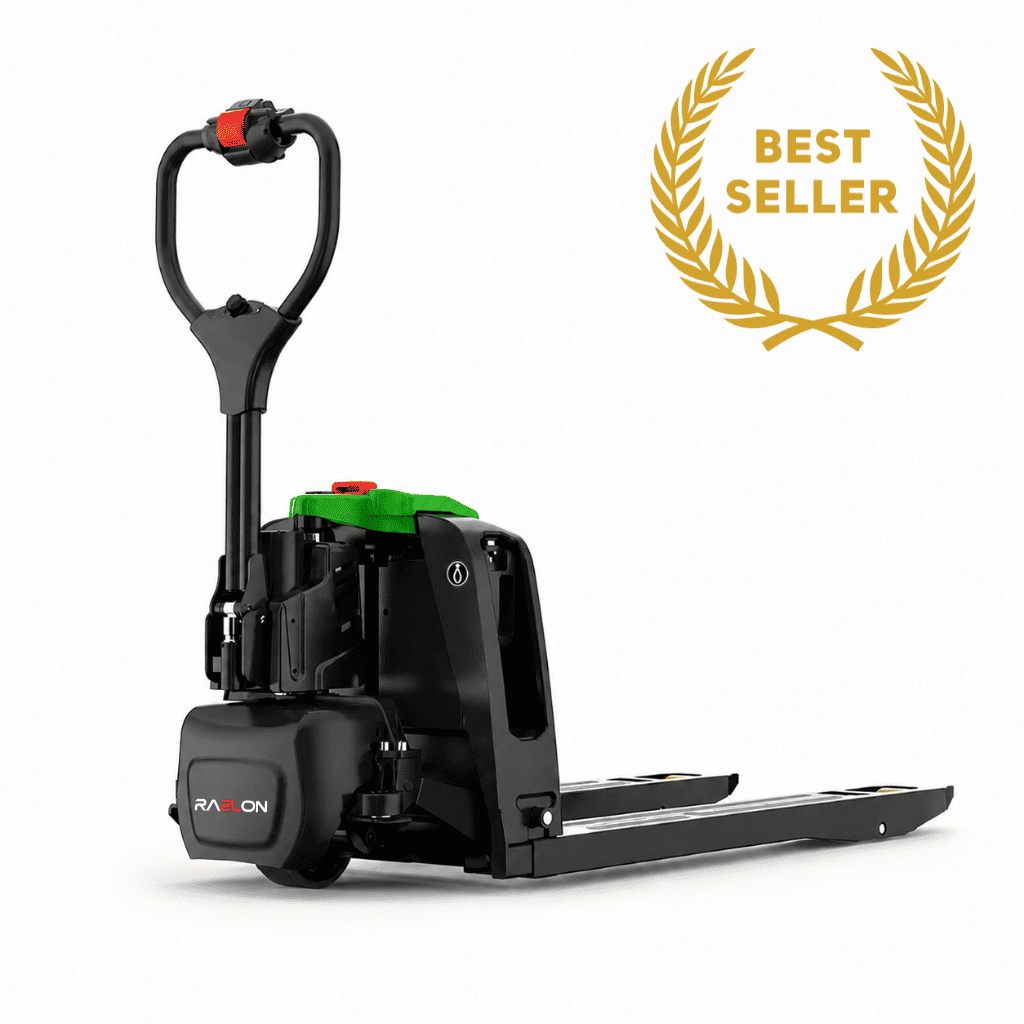
Transpalette électrique lithium-ion Raelon F4 3300 lb
1 859 $ CAD / 1 699 $ USD
2 190 $ CAD / 1 999 $ USD
Un transpalette électrique au lithium équilibré de 3300 lb pour la réception, les réserves et le déplacement en arrière-boutique.
Voir le produit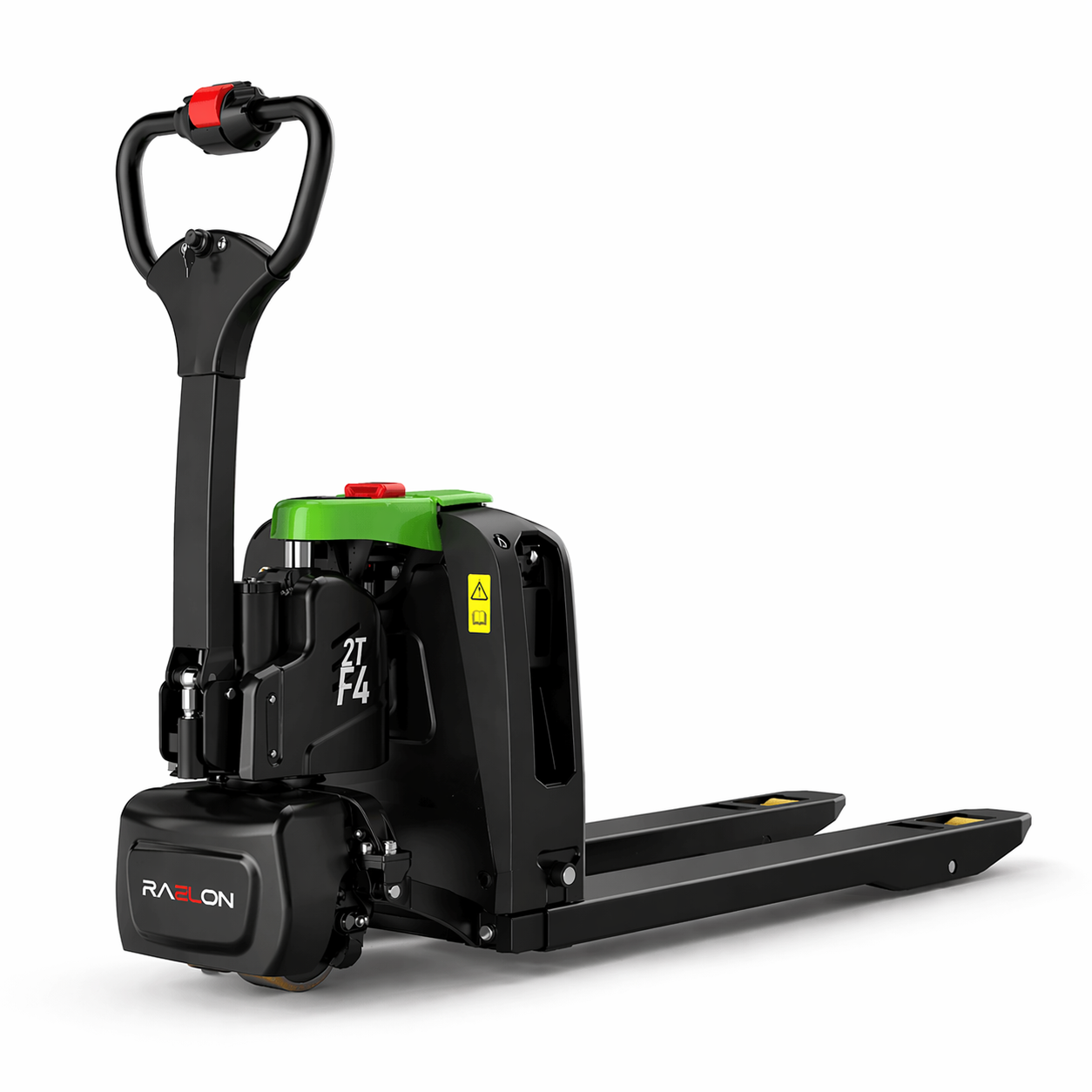
Transpalette électrique lithium-ion Raelon F4-201 4400 lb
2 895 $ CAD
3 217 $ CAD
Un transpalette électrique au lithium de 4400 lb pour les livraisons de détail plus lourdes, le fret dense et les zones de réception plus achalandées.
Voir le produit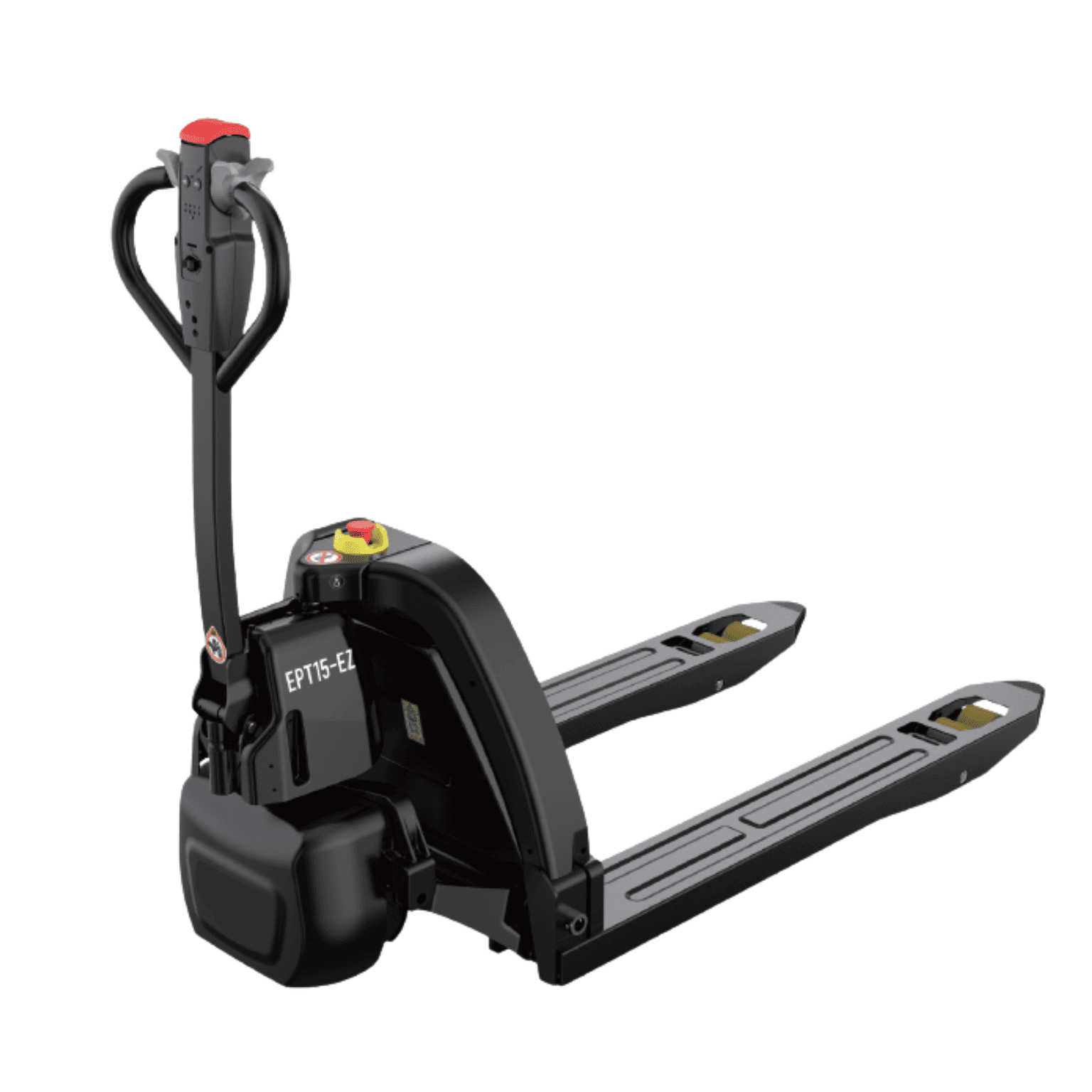
Transpalette électrique Raelon EPT15-EZ 3300 lb
1 699 $ CAD
1 999 $ CAD
Un transpalette électrique d'entrée de gamme pratique pour les travaux de réserve plus légers, les trajets courts et les petits espaces.
Voir le produitQuel modèle Raelon convient aux arrière-boutiques de détail ?
Raelon propose plusieurs options de transpalettes électriques qui peuvent convenir à une utilisation en commerce de détail et en réserve.
Le Raelon F4 est une excellente option au quotidien. Il a une capacité de 3300 lb, une batterie lithium-ion et des fourches standard de 48" x 27". Il convient parfaitement aux magasins qui reçoivent des palettes standard et qui ont besoin d'une amélioration pratique par rapport aux transpalettes manuels.
Le Raelon EPT15-EZ est une autre bonne option pour les acheteurs de détail. C'est également un transpalette électrique lithium-ion de 3300 lb et il est bien adapté aux flux de travail plus légers, aux petits espaces et aux trajets de transport courts. Pour de nombreuses arrière-boutiques de détail, il peut s'agir d'un choix de transpalette motorisé rentable.
Le Raelon F4-201 est préférable lorsque le magasin ou l'établissement gère des palettes plus lourdes. Avec une capacité de 4400 lb, il offre plus de marge de manœuvre pour le fret dense ou les zones de réception plus achalandées. Il peut être plus que ce dont certaines arrière-boutiques de détail ont besoin, mais il est utile lorsque les livraisons plus lourdes sont courantes.
Pour la plupart des acheteurs d'arrière-boutiques de détail, les premiers modèles à comparer sont le F4 et l'EPT15-EZ.
Liste de contrôle pour l'achat d'un transpalette pour arrière-boutique de détail
Avant de choisir un transpalette électrique pour une réserve ou une arrière-boutique, vérifiez l'espace de travail réel.
Mesurez le chemin le plus étroit, pas seulement la porte de réception principale. Vérifiez si le chariot peut tourner avec une palette chargée. Confirmez la taille de la palette et l'ajustement des fourches. Évaluez la fréquence des livraisons et le poids que l'équipe gère habituellement.
Utilisez cette liste de vérification :
- Poids typique des palettes
- Taille de la palette et entrée des fourches
- Largeur de la porte de réception
- Largeur des allées de l'arrière-boutique
- Espace de braquage avec une palette chargée
- État du sol
- Fréquence des livraisons
- Nombre de palettes par livraison
- Emplacement de la station de charge de la batterie
- Expérience de l'opérateur
- Pièces de rechange et support de garantie
Une arrière-boutique n'a pas besoin du plus gros chariot. Elle a besoin du bon chariot pour le trajet quotidien.
Erreurs courantes à éviter
La première erreur est d'acheter uniquement en fonction du prix. Un modèle à faible coût peut ne pas être utile s'il est difficile de le faire tourner ou de le charger dans l'arrière-boutique.
La deuxième erreur est d'acheter trop grand. Un transpalette électrique plus lourd ou plus long peut fonctionner dans un entrepôt, mais sembler maladroit dans un petit entrepôt.
La troisième erreur est d'ignorer la taille des fourches. Les fourches standard conviennent à de nombreuses palettes, mais les petites palettes ou les palettes inhabituelles doivent être vérifiées au préalable.
La quatrième erreur est de supposer que les transports courts n'ont pas besoin de puissance électrique. Les déplacements courts peuvent toujours être fatigants s'ils sont fréquents ou impliquent des palettes plus lourdes.
La cinquième erreur est d'ignorer le flux de travail des petites équipes. Si seulement un ou deux employés reçoivent habituellement les livraisons, la facilité d'utilisation est importante.
Guides connexes
- Guide d'achat d'un transpalette électrique compact : ce qu'il faut vérifier avant de commander
- Transpalette électrique pour petites entreprises : un guide d'achat pratique
Recommandation finale
Un transpalette électrique peut être une amélioration pratique pour les arrière-boutiques et les entrepôts de détail lorsque le déplacement des palettes devient fréquent, plus lourd ou difficile à gérer manuellement pour une petite équipe.
Pour de nombreux acheteurs au détail, le Raelon F4 offre un excellent équilibre entre capacité, puissance de la batterie au lithium et compatibilité avec les palettes standard. L'EPT15-EZ convient bien aux mouvements quotidiens plus légers et aux petits espaces de travail. Le F4-201 est préférable lorsque des palettes plus lourdes font partie du flux de travail de réception régulier.
Si vous choisissez un transpalette électrique pour une arrière-boutique ou un entrepôt de détail, commencez par l'espace. Mesurez le trajet, vérifiez la taille des palettes, examinez la fréquence des livraisons et choisissez le modèle qui correspond à la façon dont votre équipe travaille réellement.
Parcourez la collection complète de transpalettes électriques Raelon, ou contactez Raelon pour comparer la capacité, la taille des fourches, la configuration de la batterie, l'espace de braquage, l'expédition, la garantie, les pièces de rechange et le support de service partout au Canada et aux États-Unis.


