

Les petites entreprises commencent souvent par un transpalette manuel, car il semble simple et abordable. Cela peut fonctionner lorsque les livraisons sont légères et que les mouvements de palettes sont occasionnels.
Mais à mesure que l'entreprise se développe, le même transpalette manuel peut devenir un goulot d'étranglement quotidien. Les employés peuvent consacrer trop d'efforts à déplacer des palettes lourdes, la réception peut prendre plus de temps et les petites équipes peuvent avoir du mal à suivre le rythme pendant les périodes de livraison chargées.
Un transpalette électrique peut être une amélioration pratique pour les petites entreprises qui reçoivent des palettes régulièrement mais n'ont pas besoin d'un chariot élévateur complet. Ce guide explique ce qu'il faut vérifier avant d'acheter, y compris le budget, l'espace, l'effort des employés, la réception des livraisons, le mouvement quotidien, la garantie et le support après-vente. Si vous comparez des options maintenant, vous pouvez commencer par la collection de transpalettes électriques Raelon.
Dans ce guide :
- Pourquoi les petites entreprises envisagent un transpalette électrique
- Commencez par votre budget réel
- L'espace est souvent la plus grande contrainte
- Réception des livraisons : le cas d'utilisation le plus courant
- Effort des employés et mouvement quotidien
- À quelle fréquence déplacez-vous des palettes ?
- Choisir entre EPT15-EZ, F4 et F4-201
- Garantie, pièces et support après-vente
Pourquoi les petites entreprises envisagent un transpalette électrique
Une petite entreprise n'a pas toujours un gestionnaire d'entrepôt, une équipe de réception complète ou un personnel dédié à la manutention. Le propriétaire, le gérant ou les employés réguliers peuvent être ceux qui déchargent les livraisons et déplacent l'inventaire.
C'est là qu'un transpalette électrique peut aider.
Il offre à l'équipe un mouvement motorisé sans passer à des équipements d'entrepôt plus grands. L'opérateur marche toujours avec la machine, mais le moteur gère le déplacement. Cela réduit l'effort de poussée et de traction requis avec les transpalettes manuels.
Pour les petites entreprises, le principal avantage n'est pas seulement la vitesse. C'est de faciliter le déplacement quotidien des palettes pour une petite équipe.
Un transpalette électrique motorisé peut être judicieux pour :
- Petits entrepôts
- Magasins de détail
- Ateliers de pièces automobiles
- Espaces de fabrication légère
- Entreprises alimentaires et de boissons
- Zones de stockage e-commerce
- Salles d'exposition avec inventaire en arrière-boutique
- Petites opérations de distribution
L'objectif est simple : déplacer les palettes plus facilement sans acheter plus de machine que l'entreprise n'en a besoin.
Conseil d'achat rapide
Pour une petite entreprise, le meilleur transpalette électrique n'est généralement pas le plus grand modèle. C'est le modèle qui correspond à l'espace, au poids des palettes, à la routine de livraison et au budget sans ajouter de complexité inutile.
Commencez par votre budget réel
Le budget est important pour les petites entreprises.
Un transpalette manuel coûte moins cher à l'achat. Un transpalette d'occasion peut également sembler attrayant. Mais le prix d'achat le plus bas ne signifie pas toujours la meilleure valeur.
Lorsque vous comparez les transpalettes électriques, pensez à l'ensemble du cas d'utilisation. Si le personnel déplace des palettes chaque semaine ou chaque jour, le coût du temps et de l'effort commence à être important. Un transpalette manuel peut être bon marché, mais il peut ralentir l'équipe si les charges sont lourdes ou si le chemin de déplacement est plus long que prévu.
Considérez également ce qui est inclus avec l'équipement.
Avant d'acheter, vérifiez :
- Capacité de charge
- Type de batterie
- Chargeur inclus
- Taille des fourches
- Couverture de la garantie
- Disponibilité des pièces de rechange
- Coût d'expédition
- Options de livraison ou de ramassage
- Support après-vente
Une petite entreprise ne devrait pas acheter uniquement en fonction du prix affiché. La meilleure question est de savoir si le modèle de transpalette électrique facilitera le travail quotidien sans créer de nouveaux problèmes. Si vous hésitez encore entre rester manuel ou passer à un modèle électrique, lisez notre guide sur le transpalette électrique vs transpalette manuel.
L'espace est souvent la plus grande contrainte
Les petites entreprises ont généralement un espace limité.
La zone de stockage peut être en partie un entrepôt, en partie un bureau, en partie une zone de réception et en partie un espace de stockage supplémentaire. Il peut y avoir des étagères, des chariots, des boîtes, des portes, des clients, des employés et des livreurs partageant tous la même zone.
Cela signifie que la taille et la maniabilité sont importantes.
Avant de commander un transpalette électrique, mesurez la zone de travail réelle. Ne vérifiez pas seulement si le transpalette passe par la porte. Vérifiez s'il peut tourner avec une palette chargée.
Mesurez :
- Largeur de la porte de réception
- Largeur des allées
- Entrée de la salle de stockage
- Espace de braquage
- Distance entre le point de dépôt de la livraison et le stockage
- Espace près des rayonnages ou des étagères
- Emplacement de chargement
Un transpalette électrique compact peut faire une grande différence dans une zone de travail plus petite. Mais le modèle doit toujours avoir une capacité suffisante et un support de fourche pour vos charges. Pour les petits espaces, le transpalette électrique lithium-ion Raelon F4 3300 lb est une excellente option polyvalente, tandis que le Raelon EPT15-EZ peut convenir à des travaux plus légers et à des budgets plus serrés.
Réception des livraisons : le cas d'utilisation le plus courant pour les petites entreprises
Pour de nombreuses petites entreprises, la première utilisation réelle d'un transpalette électrique est la réception des livraisons.
Un camion arrive. L'équipe doit déplacer une ou plusieurs palettes de la zone de livraison vers le stockage. Parfois, cela arrive une fois par semaine. Parfois, cela arrive tous les jours.
Si la palette est légère et le chemin court, un transpalette manuel peut suffire. Mais si la palette est lourde, que le chemin comprend des virages ou que le même employé gère souvent la réception, la puissance électrique devient plus utile.
Un transpalette électrique motorisé peut aider à :
- Déplacer les palettes de l'entrée de livraison vers le stockage
- Dégager plus rapidement les zones de réception
- Réduire l'effort pour les petites équipes
- Manutentionner des palettes standard plus lourdes
- Déplacer des marchandises en toute sécurité à basse vitesse
- Éviter que les opérations quotidiennes ne soient interrompues par le travail de réception
Les petites entreprises n'ont pas toujours besoin d'équipements d'entrepôt à grand volume. Mais elles ont besoin que la réception soit gérable. Si votre entreprise gère souvent des livraisons sur quai, consultez notre guide sur les transpalettes électriques pour quais de chargement.
Effort des employés et mouvement quotidien
L'effort des employés est l'une des principales raisons de la mise à niveau.
Un transpalette manuel peut sembler convenir pour une utilisation occasionnelle. Mais lorsque le personnel l'utilise à plusieurs reprises, la demande physique devient plus perceptible. Pousser, tirer, démarrer, arrêter et tourner une palette chargée demande des efforts.
C'est encore plus important lorsque un ou deux employés gèrent la majeure partie du travail.
Un transpalette électrique motorisé aide à réduire la tension physique liée au déplacement des palettes chargées. Il peut rendre le travail quotidien plus cohérent, surtout lorsque différents employés doivent utiliser le même équipement.
Envisagez une mise à niveau si :
- Les employés évitent d'utiliser le transpalette manuel
- Les livraisons lourdes nécessitent deux personnes
- Le déplacement des palettes ralentit la réception
- Le personnel doit déplacer des palettes plusieurs fois par semaine
- Le chemin comprend des virages ou des trajets intérieurs plus longs
- La même équipe gère le service client et le travail d'inventaire
Pour une petite entreprise, l'équipement doit simplifier le travail. Il ne doit pas exiger de main-d'œuvre supplémentaire à chaque livraison.
À quelle fréquence déplacez-vous des palettes ?
La fréquence d'utilisation doit guider l'achat.
Si votre entreprise déplace une palette légère quelques fois par an, un transpalette manuel peut encore suffire. Si vous déplacez des palettes chaque mois, la décision dépend du poids, de l'espace et de l'effort des employés. Si vous déplacez des palettes chaque semaine ou chaque jour, un transpalette électrique devient plus facile à justifier.
Pensez aux opérations normales et aux périodes de pointe.
Une entreprise peut recevoir de petites livraisons la plupart des semaines, puis des expéditions plus importantes avant les vacances, les promotions ou les changements d'inventaire saisonniers. Acheter uniquement pour la semaine la plus calme peut entraîner des problèmes plus tard.
Demandez :
- Combien de palettes arrivent chaque semaine ?
- Quel est leur poids ?
- Quelle est la distance de leur déplacement ?
- Qui les déplace ?
- Le travail devient-il plus difficile à mesure que l'entreprise se développe ?
- Recevrez-vous plus de marchandises palettisées l'année prochaine ?
Si le mouvement des palettes devient une partie normale de votre entreprise, un transpalette électrique pratique peut être un meilleur choix à long terme que de rester manuel.
Choisir entre EPT15-EZ, F4 et F4-201
Raelon propose plusieurs options de transpalettes électriques qui peuvent répondre aux besoins des petites entreprises.
Le Raelon EPT15-EZ est un bon choix d'entrée de gamme pour de nombreuses petites entreprises. C'est un transpalette électrique lithium-ion de 3300 lb conçu pour les flux de travail plus légers, les trajets de transport courts et les zones de travail plus petites. Il peut être une option pratique pour les acheteurs sensibles au prix qui souhaitent un mouvement motorisé sans sur-acheter.
Le Raelon F4 est un choix polyvalent plus robuste. Il offre également une capacité de 3300 lb et une batterie lithium-ion, mais il est positionné comme un modèle pratique pour une utilisation quotidienne dans les entrepôts, les arrière-boutiques de vente au détail, les réserves et la manutention générale. Pour de nombreuses petites entreprises, le F4 est l'option équilibrée.
Le Raelon F4-201 est un transpalette électrique lithium-ion de 4400 lb. Il est logique lorsque l'entreprise gère des palettes plus lourdes, des produits plus denses ou un travail de réception plus exigeant. Il peut être plus que ce dont certaines petites entreprises ont besoin, mais il est utile lorsque la marge de capacité est importante.
Un moyen simple de choisir :
- Choisissez EPT15-EZ pour les travaux plus légers et les budgets plus serrés.
- Choisissez F4 pour une utilisation quotidienne polyvalente.
- Choisissez F4-201 pour les palettes plus lourdes et les réceptions plus exigeantes.
Si la capacité est le principal critère de décision, lisez Transpalette électrique de 3300 lb vs 4400 lb : Quelle capacité convient à votre opération ?.
Transpalettes électriques Raelon recommandés
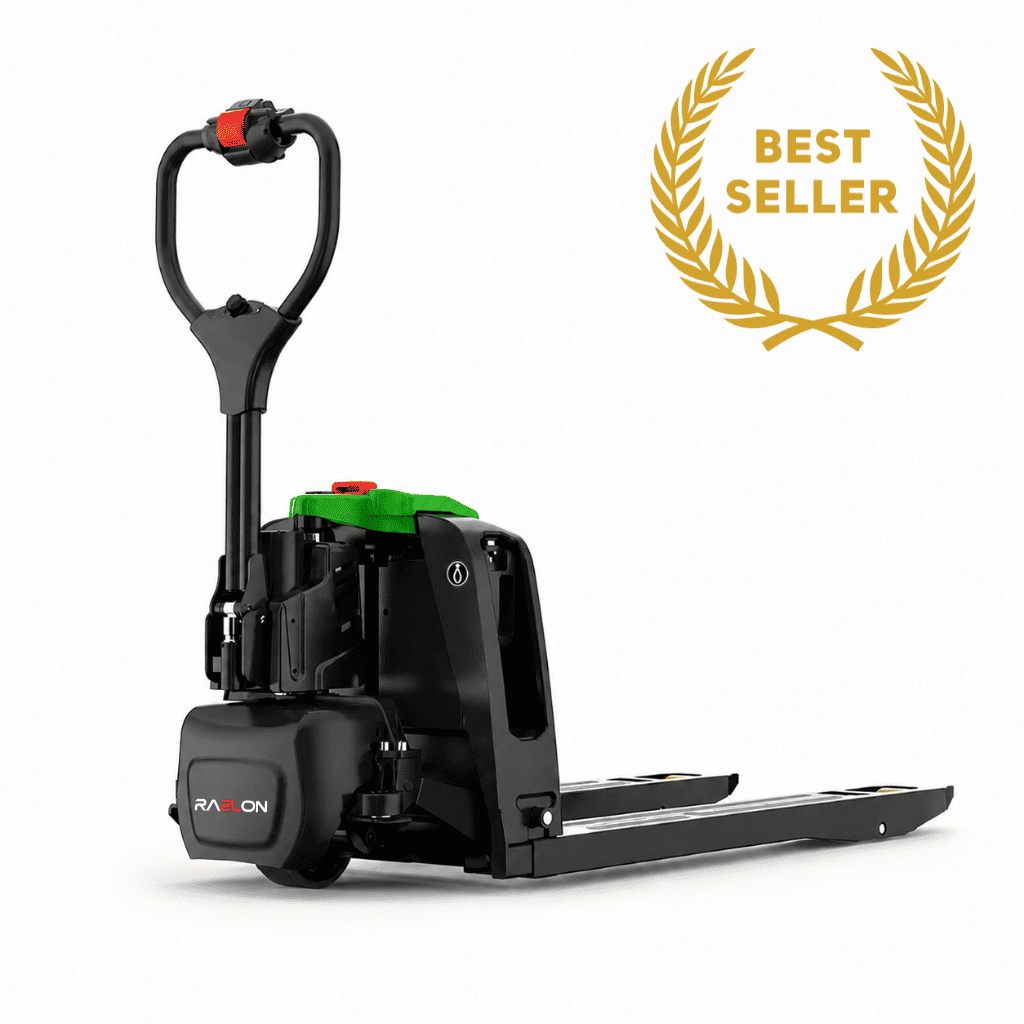
Transpalette électrique lithium-ion Raelon F4 3300 lb
1 859 CAD / 1 699 USD
2 190 CAD / 1 999 USD
Un transpalette électrique lithium de 3300 lb équilibré pour la réception quotidienne des petites entreprises, les réserves et les mouvements d'entrepôt.
Voir le produit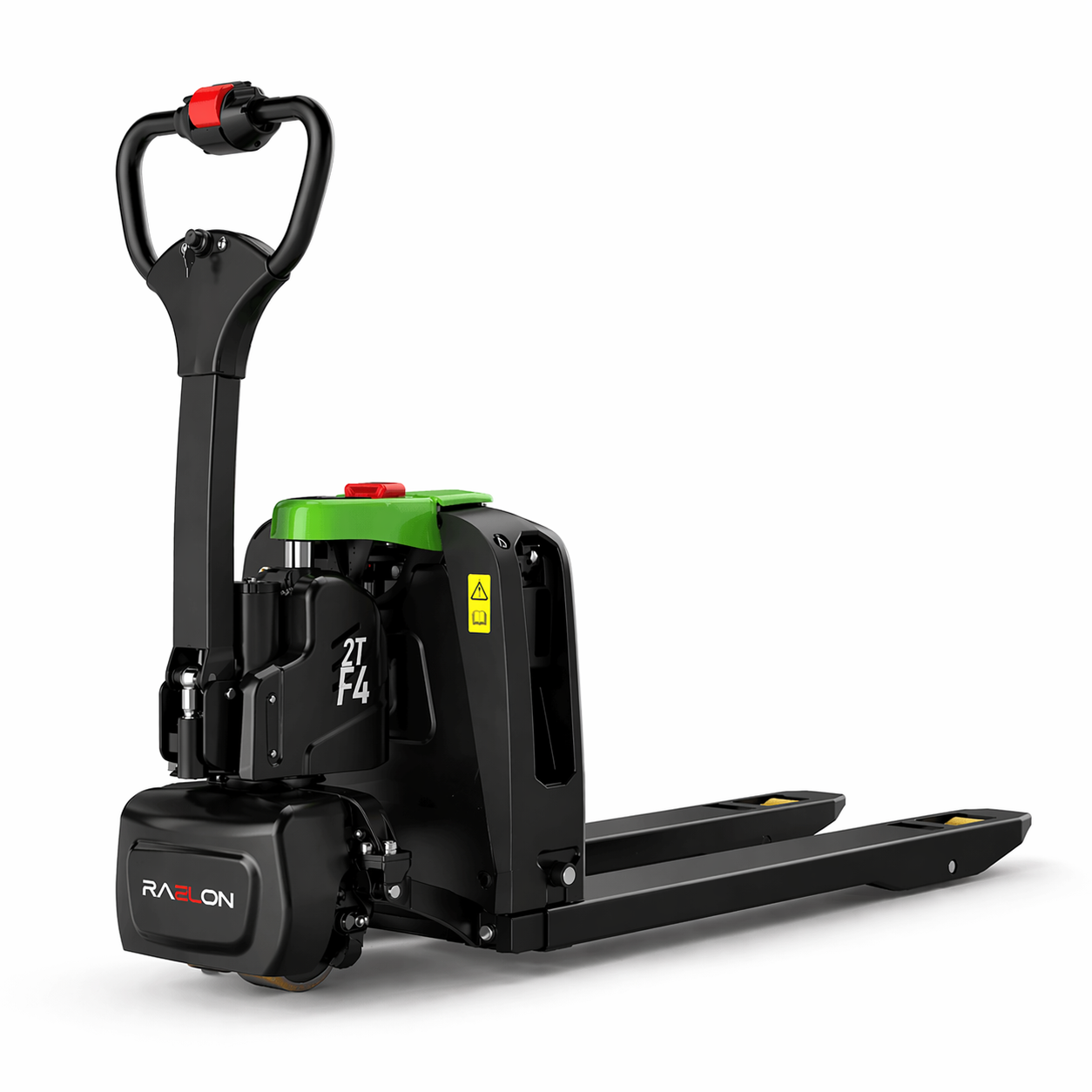
Transpalette électrique lithium-ion Raelon F4-201 4400 lb
2 895 CAD
3 217 CAD
Un transpalette lithium de 4400 lb pour les livraisons plus lourdes, les palettes plus denses et les travaux de réception plus exigeants.
Voir le produit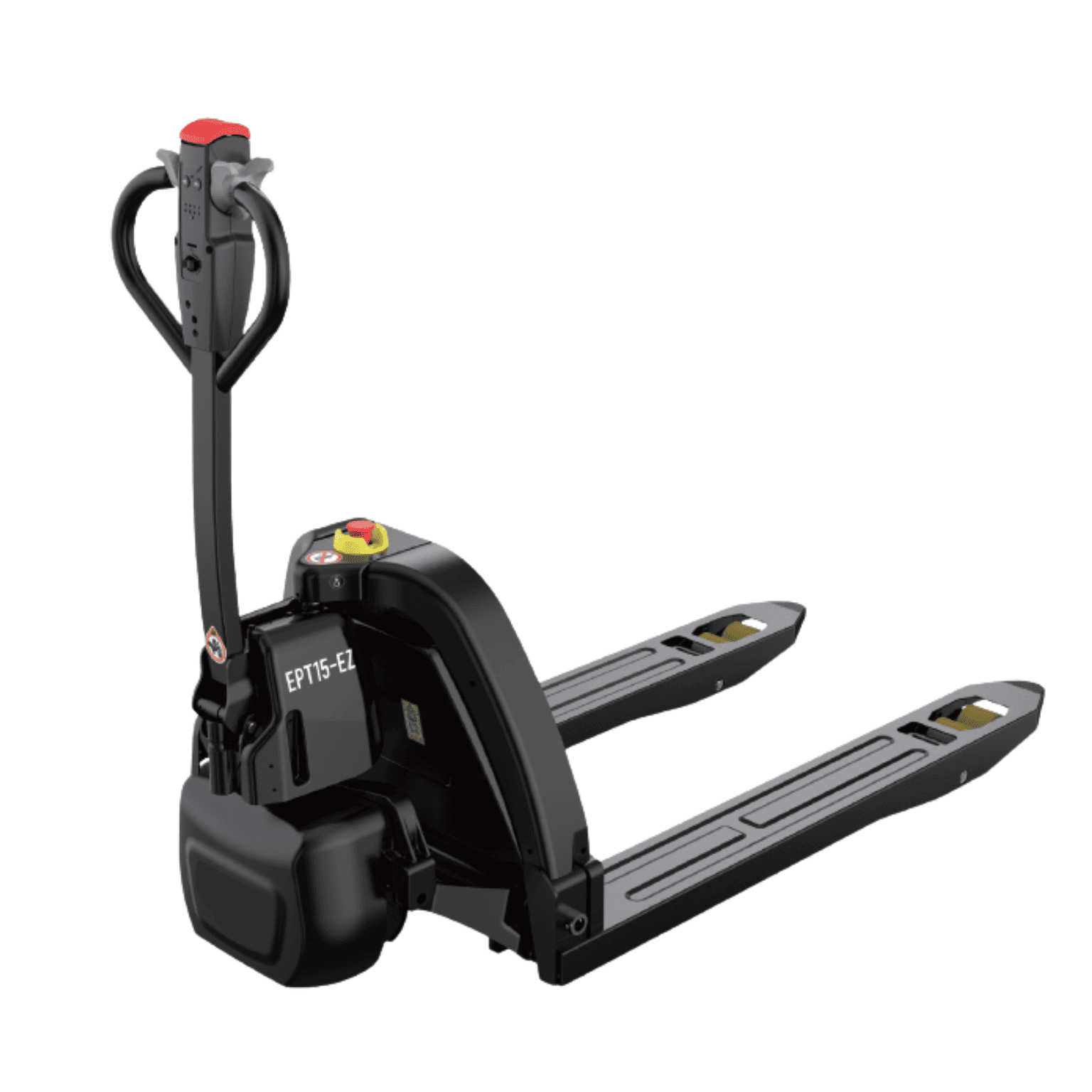
Transpalette électrique Raelon EPT15-EZ 3300 lb
1 699 CAD
1 999 CAD
Un transpalette électrique d'entrée de gamme pratique pour les mouvements quotidiens plus légers, les petits espaces et les budgets plus serrés.
Voir le produitConfiguration de la batterie pour les petites entreprises
La configuration de la batterie doit être simple.
Les petites entreprises n'ont pas toujours de station de charge dédiée. Le transpalette peut devoir être chargé dans un arrière-boutique, une zone de stockage ou un petit coin d'entrepôt.
L'alimentation par batterie lithium-ion est utile car elle prend en charge une routine de charge plus pratique. Une batterie amovible peut faciliter la charge si l'entreprise ne veut pas déplacer toute la machine vers la zone de charge.
Avant d'acheter, vérifiez :
- Type de batterie
- Chargeur inclus
- Emplacement de charge
- Fréquence d'utilisation du transpalette
- Si la batterie est amovible
- Besoins de charge en intérieur
- Conditions de stockage froides ou chaudes
Pour les petites entreprises au Canada ou dans les régions du nord des États-Unis, la température est importante. Si la batterie est stockée dans une zone de réception froide, il peut être préférable de la retirer et de la charger à l'intérieur. Pour plus de détails, consultez Batterie de transpalette électrique Lithium-ion vs AGM : quelle configuration de batterie choisir ?.
Taille des fourches et palettes standard
La taille des fourches doit correspondre aux palettes que vous recevez.
De nombreuses petites entreprises utilisent des palettes standard, donc une taille de fourche de 48" x 27" est souvent pratique. Cette taille convient à de nombreuses applications de palettes courantes en Amérique du Nord et fonctionne bien pour le mouvement normal de réception et de stockage.
Mais tous les fournisseurs n'expédient pas de la même manière. Certains utilisent des palettes plus petites, des palettes d'affichage ou des patins inhabituels. Si votre entreprise reçoit de différents fournisseurs, mesurez les ouvertures des palettes avant de commander.
Vérifiez également l'espace où le transpalette tournera. Les fourches standard supportent bien la charge, mais elles ont besoin de suffisamment d'espace pour se déplacer.
Si votre zone de travail est extrêmement étroite, demandez si une option de fourche courte est judicieuse. Des fourches plus courtes peuvent aider dans les espaces limités, mais elles doivent toujours supporter correctement la palette. Pour plus de détails sur l'achat, lisez comment choisir la taille de fourche d’un transpalette électrique.
Garantie, pièces et service après-vente
Le soutien compte plus que ce que de nombreux petits acheteurs d'entreprise s'attendent.
Si le transpalette électrique cesse de fonctionner, l'entreprise peut ne pas avoir de machine de secours. Une roue cassée, un problème de chargeur, un problème de batterie ou un problème hydraulique peuvent interrompre le travail de réception et de stockage.
Avant d'acheter, renseignez-vous sur :
- Couverture de la garantie
- Piles de rechange
- Chargeurs
- Roues et roulettes
- Pièces hydrauliques
- Pièces de commande
- Expédition et support de service
La disponibilité des pièces est importante car les transpalettes électriques sont des outils de travail. Les pièces d'usure courantes ne devraient pas être introuvables. Pour les pièces de rechange, consultez les pièces de transpalette Raelon. Pour les bases de l'entretien, consultez notre guide d'entretien du transpalette électrique.
Pour une petite entreprise, l'achat auprès d'un fournisseur avec un support clair peut être plus précieux que d'économiser une petite somme d'argent au départ sur un modèle inconnu.
Neuf ou usagé pour les petites entreprises
Les petites entreprises envisagent souvent l'équipement usagé pour économiser de l'argent.
Un transpalette usagé peut fonctionner si la condition est claire et l'utilisation est légère. Mais avec un transpalette électrique, les acheteurs doivent vérifier la batterie, les roues, le système hydraulique, le chargeur, le contrôleur et la disponibilité des pièces.
Une unité usagée à faible coût peut nécessiter des réparations peu après l'achat. Si l'entreprise en dépend pour la réception, cela peut créer plus de stress que prévu.
Un nouveau transpalette électrique Raelon offre à l'acheteur un point de départ plus clair. La batterie, le chargeur, les roues et les commandes sont neufs, et l'entreprise peut planifier en fonction de la garantie et du support des pièces.
Pour une utilisation légère et occasionnelle, l'occasion peut toujours être envisagé. Pour une utilisation professionnelle régulière, le neuf est souvent plus facile à gérer. Si vous comparez les deux options, lisez Transpalette électrique neuf ou usagé : ce que les acheteurs doivent vérifier avant de payer.
Erreurs courantes commises par les petites entreprises
La première erreur est d'acheter uniquement en fonction du prix. Une machine moins chère n'est pas utile si elle ne correspond pas à la taille de votre palette, à votre espace ou à votre charge de travail.
La deuxième erreur est d'attendre trop longtemps pour effectuer une mise à niveau. Si les employés ont du mal à manipuler manuellement les palettes chaque semaine, l'entreprise a peut-être déjà dépassé le stade du mouvement manuel uniquement.
La troisième erreur est d'acheter une machine trop grande. Toutes les petites entreprises n'ont pas besoin du modèle de plus grande capacité.
La quatrième erreur est d'ignorer la routine de charge. Le transpalette électrique a besoin d'un endroit pratique pour être chargé.
La cinquième erreur est d'oublier le support. La garantie et les pièces de rechange sont importantes après la vente.
Guides connexes
- Transpalette électrique vs transpalette manuel : Quand est-il temps de passer à la vitesse supérieure ?
- Guide d'achat de transpalette électrique compact : Ce qu'il faut vérifier avant de commander
Recommandation finale
Un transpalette électrique peut être un investissement pratique pour les petites entreprises qui reçoivent régulièrement des palettes, déplacent des stocks dans un espace limité ou dépendent d'une petite équipe pour gérer la réception des livraisons.
Choisissez l'EPT15-EZ si vous souhaitez un transpalette électrique plus économique pour les travaux plus légers, les transports courts et les petits espaces. Choisissez le F4 si vous souhaitez un modèle plus robuste et polyvalent pour un usage professionnel quotidien. Choisissez le F4-201 si votre entreprise manipule des palettes plus lourdes ou a besoin d'une plus grande capacité de charge.
Si vous êtes propriétaire d'une petite entreprise et que vous comparez des transpalettes électriques, commencez par votre charge de travail réelle. Vérifiez le poids des palettes, la fréquence des livraisons, l'espace de stockage, l'effort des employés, la configuration de la batterie, la garantie et le support des pièces avant de commander.
Parcourez la collection complète de transpalettes électriques Raelon, ou contactez Raelon pour comparer la capacité, la taille des fourches, la configuration de la batterie, l'espace de virage, l'expédition, la garantie, les pièces de rechange et le support de service au Canada et aux États-Unis.


