

An electric forklift used to be seen as the “clean indoor option,” while propane or diesel handled the tougher jobs. That line is getting blurry. Today’s electric forklifts can run quietly and fume-free indoors, and many electric counterbalance forklift models are built for demanding warehouse work, dock handling, and certain mixed-use applications.
If you are new to buying or operating a forklift electric model, this guide will help you understand what an electric forklift truck is, how the main types differ, what to know about an electric forklift battery, and what to check before putting an electric forklift for sale on your shortlist.
The goal is simple: match the truck to your real workload, not just the headline capacity number.
In This Guide:
What Counts as an Electric Forklift?
An electric forklift is a powered industrial truck that uses electric motors for travel and lift, drawing energy from a battery pack. In everyday buying language, you may see different phrases used for similar search intent, including electric forklift, electric forklifts, forklift electric, forklift electric forklift, electric forklift truck, electric forklift trucks for sale, electric forklift for sale, and electric counterbalance forklift.
The practical question is always the same: what job are you trying to do, what height do you need to reach, and where will the truck operate?
Quick Buying Tip
If you only move pallets across the floor, an electric pallet jack may be enough. If you need racking height, stacking, or more controlled load handling at elevation, you are likely shopping for an electric forklift or electric stacker.
Electric Forklift vs Electric Pallet Jack
If your team mainly moves pallets at floor level, an electric pallet jack is often the fastest and simplest tool. It is compact, easier to learn, and typically a better match for trailer work, dock plates, and tight staging lanes.
If you need to stack pallets into racking, lift to higher shelves, or handle loads at elevation, you are in electric forklift truck territory.
| Equipment | Best For | Main Limitation |
|---|---|---|
| Electric Pallet Jack | Floor-level pallet movement, trailer work, docks, stockrooms | Not designed for racking height or true stacking |
| Electric Stacker | Light to mid-duty stacking in warehouse aisles | Usually less versatile than a full forklift |
| Electric Forklift | Racking, stacking, higher lift heights, heavier warehouse handling | Requires more space, training, and higher upfront investment |
If your operation is mostly floor-level transport and staging, compare models in our electric pallet jacks collection. If you need stacking height, compare electric stackers. If you need full racking work, start with our electric forklift collection.
Types of Electric Forklifts and What Each Is Best At
Most buyers start by searching “electric forklifts for sale,” then get lost in model names. Instead, start with the core type and match it to your layout and workload.
1. Electric Counterbalance Forklift
This is the classic forklift shape. The load is in front, the counterweight is in the back, and the operator can drive directly up to a pallet and lift. Electric counterbalance forklifts are commonly used for general warehouse work, dock work, mixed indoor use, and certain outdoor yards depending on tire choice, ground conditions, and site requirements.
2. 3-Wheel Electric Forklifts
Three-wheel electric forklifts are popular where turning space is tight. They are commonly used for dense warehouse aisles where maneuverability matters. A typical use case is fast indoor work with frequent turns, short travel distances, and repeated racking tasks.
For a real-world example, see the Raelon CPD15 3300lbs Electric Forklift with UL Charger, designed for indoor warehouse handling where tight turning and reliable lift performance matter.
3. Warehouse-Specific Electric Trucks
Reach trucks, order pickers, and other narrow-aisle equipment are electric forklifts in the broader sense, but they are specialized. If your operation is mostly racking, picking, or narrow-aisle movement, these may outperform a general counterbalance truck for that specific job.
Safety Basics: Stability Is Not Optional
Most serious forklift incidents are not about “not knowing the buttons.” They are about stability, speed, and load handling. Forklifts can tip when the combined center of gravity shifts outside the stable operating zone, especially during sharp turns, hard braking, sudden direction changes, or lifting loads that exceed the rated capacity.
Practical rules that reduce risk:
- Keep loads low while traveling.
- Avoid sharp turns at speed.
- Do not brake hard or change direction suddenly with a load.
- Know the load weight and load center.
- Respect the data plate and never guess capacity.
- Use trained, authorized operators only.
Training and Certification: What You Should Know
In many workplaces, forklift operators must be trained, evaluated, and authorized before operating equipment. Requirements vary by location and workplace policy, but the practical standard is clear: trained, competent operators and clear site rules reduce incidents.
If your team also uses powered pallet jacks, read our guide on pallet jack certification and training to understand how powered pallet jack training differs from forklift training.
Daily Pre-Shift Checks for Electric Forklifts
A forklift that looks fine can still have a risky issue: weak brakes, damaged forks, steering problems, mast wear, or battery connector damage. A simple daily routine can help catch problems early.
- Walk around: tires, forks, mast, chains, leaks, cracked welds, loose guards.
- Cab: seat belt, horn, lights, alarms, visibility, operator area.
- Function: steering, brakes, lift, tilt, side shift if equipped.
- Battery: secure mounting, cables not frayed, connector clean and seated, charge level adequate.
- Environment: clear travel path, dock plates stable, no overhead hazards.
If something feels off, park the truck and report it. A short delay is cheaper than a tip-over, dropped load, or damaged racking.
Electric Forklift Battery Basics
Battery choice affects runtime, maintenance, charging setup, and safety planning. Electric forklift buyers usually compare lead-acid and lithium-ion battery setups, each with different daily requirements.
Lead-Acid Batteries
Lead-acid is common and well understood, but charging requires proper ventilation and safe handling. Charging areas should be set up with safety in mind, especially where battery handling, heat, or fumes may be a concern.
Lithium-Ion Batteries
Lithium-ion is popular for consistent power delivery and reduced day-to-day maintenance in many warehouse applications. Safety still depends on using the correct charger, following procedures, and avoiding damaged or mismatched equipment. If you are comparing electric forklifts for sale, lithium setups are often chosen for simpler routines and reliable performance across shifts.
Charging Setup: What to Plan Before You Buy
When you buy an electric forklift truck, you are also adopting a charging routine. Before purchasing, ask:
- Where will the charging area be located?
- Does your site have the right power setup?
- Who is responsible for daily charging tasks?
- Will your team use fixed shift charging or opportunity charging?
- Do you need extra safety signage, PPE, or procedures around the charging area?
The right forklift can still become a headache if the charging setup does not match your operation.
How to Choose an Electric Forklift for Sale That Fits Your Job
This is where buyers get the most value: matching the truck to real tasks, not just a spec sheet.
Step 1: Define Your Top Three Jobs
Examples include unloading trailers, moving pallets to staging, putting away pallets into racking at a defined height, supporting production line supply, and removing waste or finished goods from work cells. List your top three jobs and rank them by frequency.
Step 2: Capacity and Load Center
Capacity matters, but load center is what surprises many buyers. Long loads or loads carried away from the backrest can reduce effective capacity quickly. Match your loads to the data plate and train operators to handle unusual loads correctly.
Step 3: Indoor, Outdoor, or Mixed Use
If you work outside, tire choice and ground conditions matter. Some electric counterbalance trucks can work outdoors, but you still need the right tires, ground clearance, and weather fit for your site.
Step 4: Aisle Width and Turning
If you have tight aisles, 3-wheel electric forklifts can help. Measure your narrowest turning points, staging corners, dock approaches, and rack aisles before choosing a model.
Step 5: Battery Strategy
Choose based on shift length, downtime tolerance, and who maintains batteries. If you do not have the right charging space and routine, a great deal can turn into downtime.
Step 6: Service and Parts
Downtime costs more than a slightly higher purchase price. Ask about parts availability, service response time, and typical lead times before committing. If you want to compare available options first, browse the electric forklift collection and shortlist trucks by mast height, battery type, and capacity.
Recommended Raelon Electric Forklifts
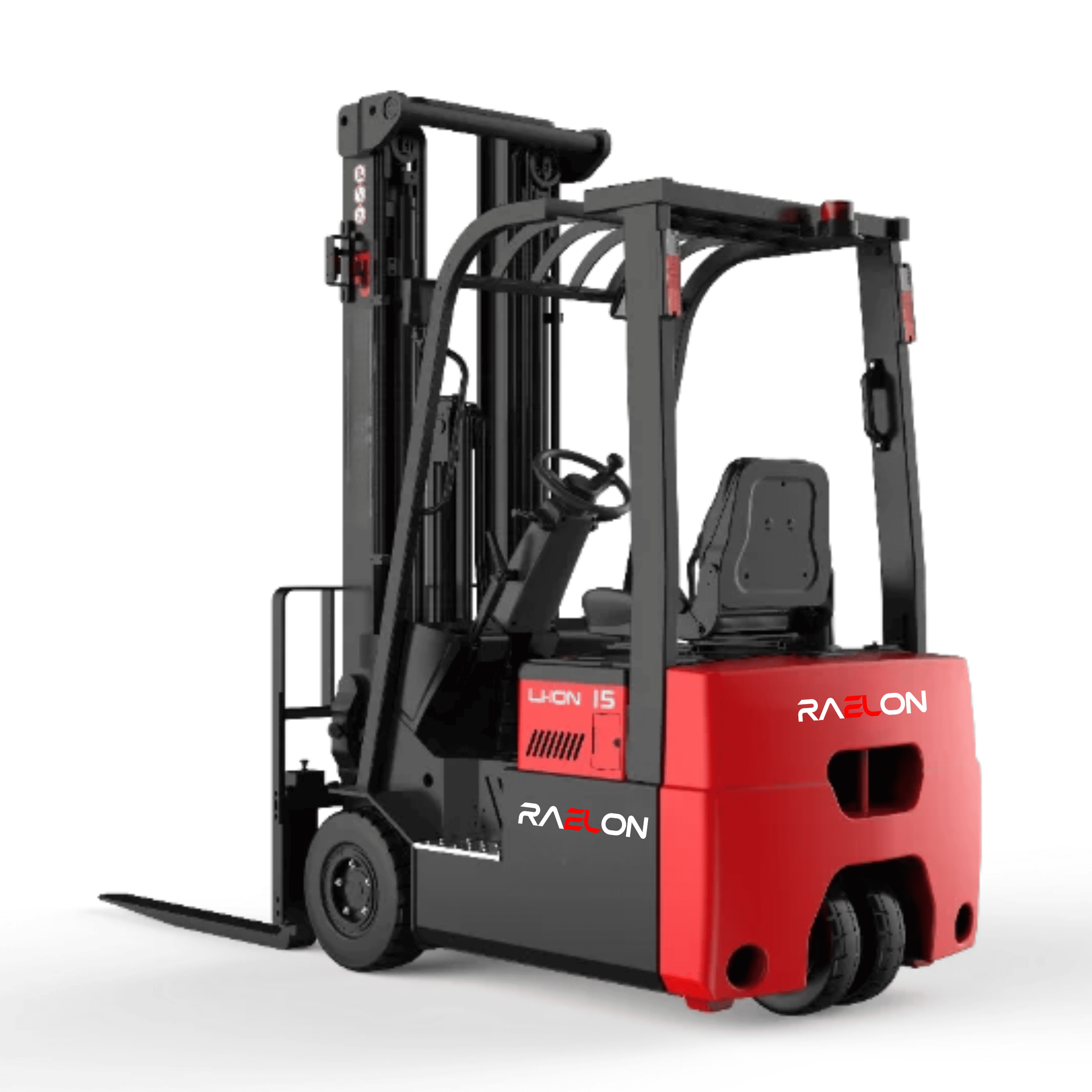
Raelon CPD15 3300lbs Electric Forklift with UL Charger
$34,800 CAD
$36,888 CAD
A compact 3-wheel electric forklift with a triplex mast, built for tighter aisles and indoor racking work.
View ProductWhy Many Warehouses Switch from IC to Electric Forklifts
The most common reasons are straightforward: no exhaust at point of use for indoor work, less daily fueling friction, simpler routine maintenance in many cases, and a quieter driver experience.
Total cost still depends on utilization, energy prices, maintenance habits, and battery replacement cycles, so it is smart to compare based on your operating hours and workflow. For many warehouses, the biggest advantage is not just lower noise or cleaner operation. It is the ability to simplify indoor handling without introducing fuel storage or exhaust management.
Common Mistakes New Operators Make
- Turning too fast with a raised load: keep the load low while traveling, slow down early, and turn gently.
- Hard braking with a heavy load: increase following distance and brake earlier.
- Guessing load weight: know the pallet weight and check the data plate.
- Charging in an unsafe area: use a designated charging space that matches your battery type and site rules.
Related Guides
- Electric Pallet Stacker Beginner Guide for Safe Stacking
- Electric Pallet Mover Explained: What It Is and When to Choose One
Quick FAQ
Are electric forklifts only for indoor use?
Not anymore. Many electric counterbalance forklifts are used indoors and can be specified for certain outdoor applications depending on tires, site conditions, and operating environment.
What is an electric counterbalance forklift?
It is the standard forklift design where the rear counterweight balances the load on the forks. Stability depends on keeping the combined center of gravity within the stable operating zone.
What is the main risk when charging a lead-acid electric forklift battery?
Hydrogen gas buildup and sulfuric acid exposure are the biggest concerns. Ventilation, PPE, and safe procedures matter.
Can I treat an “electric pallet jack forklift” like a forklift?
No. A powered pallet truck is not the same as a counterbalance forklift. They handle differently and are used for different tasks. If your workflow is mainly floor-level pallet movement, start by comparing electric pallet jacks. If you need stacking height and racking work, start by browsing electric forklifts.
Final Takeaway
The right electric forklift should match your lift height, aisle width, load center, battery routine, and daily workload. Do not buy only by capacity. Buy based on how the truck will actually work in your warehouse.
Browse our full electric forklift collection to compare available models, or contact us for help choosing the right forklift for your operation.


